The casting materials can be widely used and there is no limit to product shape or complexity of structure. Investment casting allows for closer tolerance control, lower or no machining allowance, and a better surface finish. The process enhances dimensional precision and surface quality to meet higher-level product requirements, and we have divided it into four clear stages.
Stage 1 – 3 steps
Stage 2 – 3 steps
Stage 3 – 2 steps
Stage 4 – 3 steps
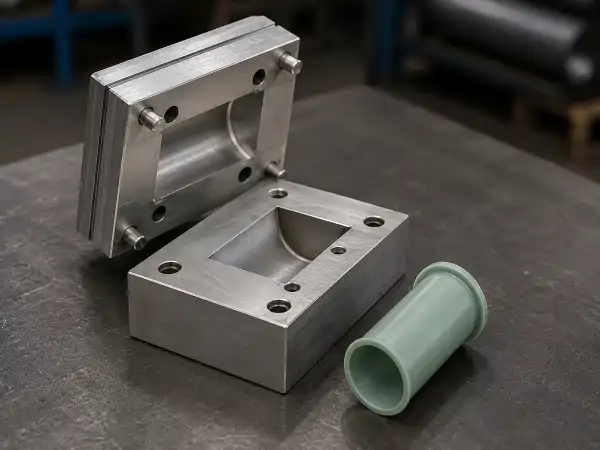
The process begins with production of a heat disposable pattern. This is usually made by injecting wax into a metal die or mould. The final dimensions and tolerances of the casting are affected by variations in the wax pattern, which makes this step critical for accuracy.
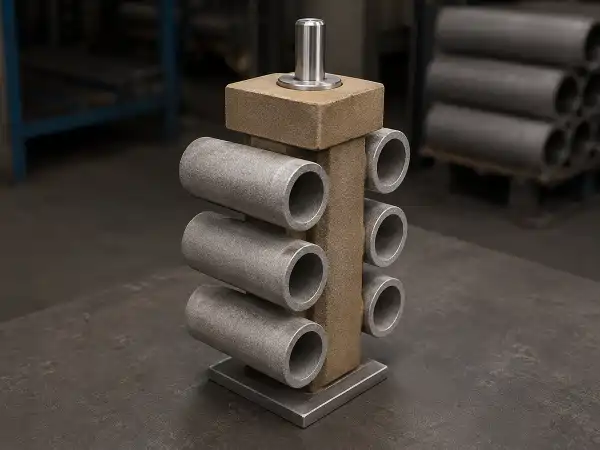
The wax pattern is attached by the gate to a central wax runner system called a sprue. Joining several patterns to one sprue creates a tree that allows many components to be cast at once, and careful handling here improves both quality and yield.
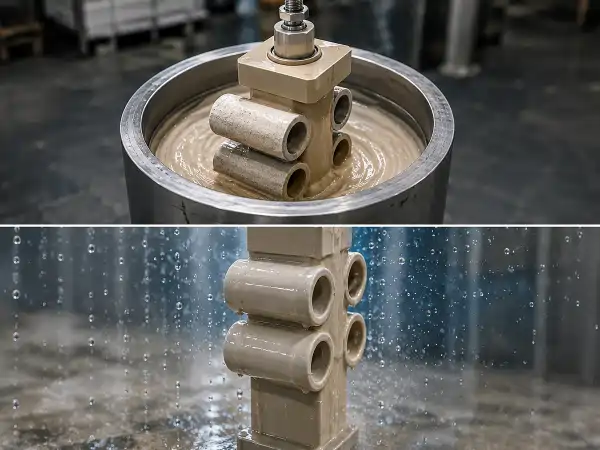
The assembly is dipped into a ceramic slurry and then into a bed of extremely fine sand. The cycle is repeated several times to build a shell of the required strength and thermal resistance, which later serves as the mould for the molten metal.
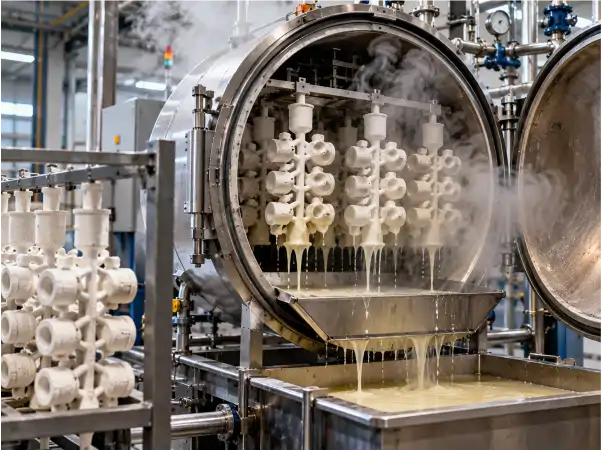
The completed shell is placed in a steam autoclave where the pattern melts and runs out, leaving behind a hollow ceramic mould. Controlled temperature and time at this stage protect shell stability and strength.
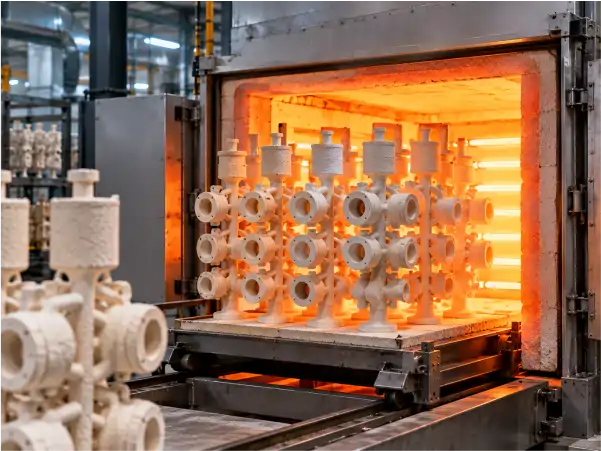
The ceramic shell mould is fired to burn out the last traces of pattern material, usually in the range of 800° C to 1100° C. Firing also prepares the mould thermally so that metal flows freely into every section.
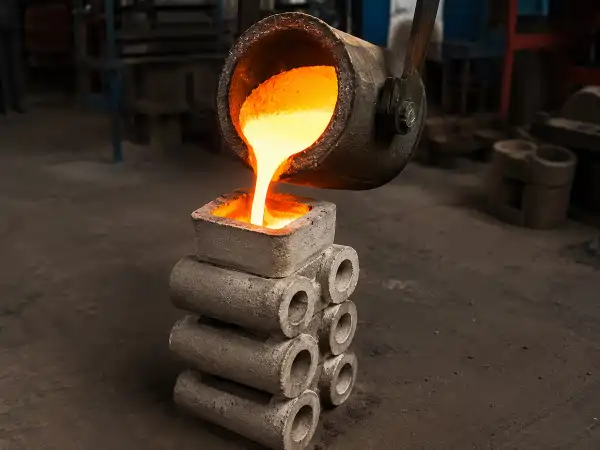
The preheated shell is filled with molten metal by gravity pouring. Pouring temperature and speed are tightly controlled to ensure consistency, prevent defects and achieve the required quality in the finished component.
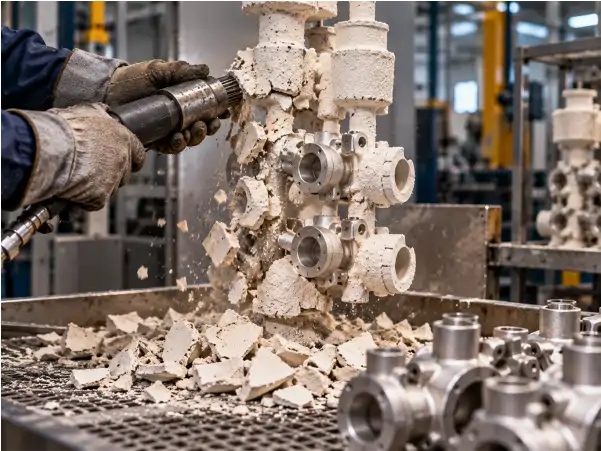
After the metal has solidified and cooled, the ceramic shell is removed by vibratory methods, leaving the cast cluster ready for separation.
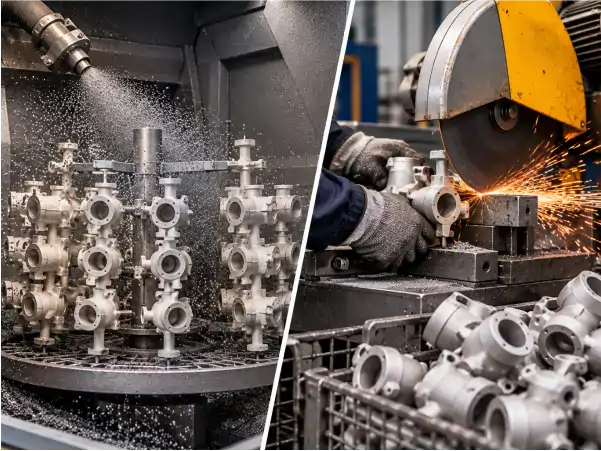
The cluster is shot blasted to remove any residual microscopic ceramic particles, and individual castings are separated from the cluster using a cut-off wheel or welding cut.
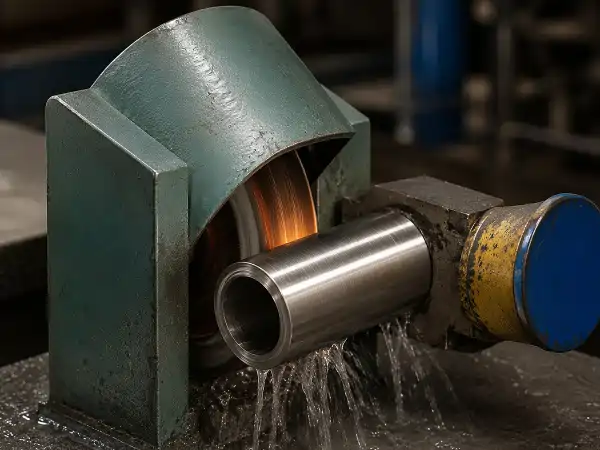
Remaining gate protrusions are removed by belt grinding, and castings are heat treated where specified by normalising, quenching or tempering to reach the required hardness and mechanical properties.
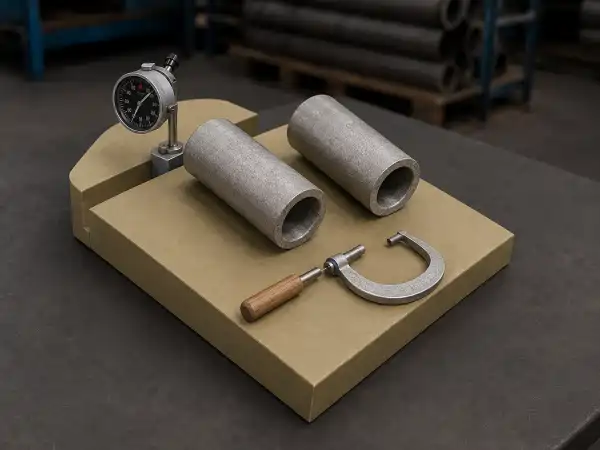
Each casting is subjected to a range of quality checks including chemical testing, physical property testing, dimensional inspection and non-destructive testing before it is released.
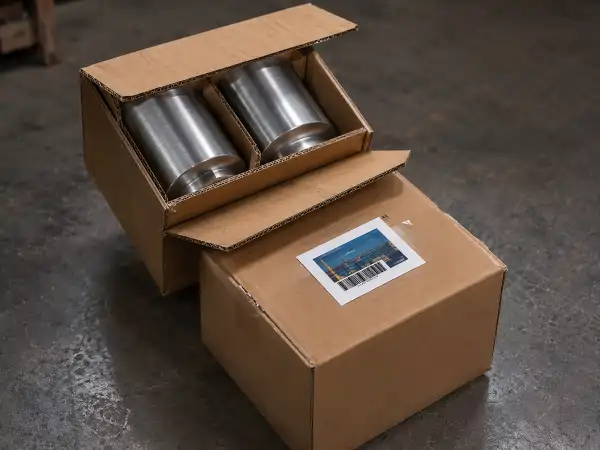
Approved castings are packed to suit the mode of transport, with export consignments crated and protected for long transit, and dispatched with full documentation.
Our team supports you through tooling design, sampling and approval so that new components reach production quickly and stay consistent thereafter.
Discuss Your Component